
- Pop
- Rock
- R&B
- Jazz
- Reggae
- Reggaeton
- Classical
- Country
- Easy Listening
- Live Music Stream
- Gospel / Christian
- Latin
- Metal
- Opera
- DJ'S
- Vocal Performance
- World
- Folk
- Funk
- Instrumental
- Orchestra
- EDM
- Afrobeats
- HipHop
- Punjabi
- Podcast
- Live Performance
- Arabic
- Documentary
- Alternative
- Dance
- Animation
- Producers
- Audiobooks
- Interviews
- Instruments
- House
- Mixtapes
- Movies
- Shows
- Mexican
- Calypso
- Video Directors
- Blues
- Albums
- Soundtracks
- Theme Songs
- Workout Music
- Marching Bands
- Gaming Music
- Music Of India
- Classic
- One Hit Wonders
- Compilation
- Musical Theatre
- Street Performance
- Video Mix
- Vlog
- Party Songs
- Throwback Hits
- Karaoke
- Holiday
- Singers & Swing
- Commercials
- Archives
- Poetry
- Solid Gold Oldies
- Biography
- News-Gossip
Archives


In 1995, Lemika was in a terrible car accident that left her confined to a wheelchair and paralyzed from the waist down. When Tupac found out about Lemika’s story, he invited her out to California to meet him. Over the course of 2 days, Lemika and her family hung out with Tupac on the set of “Gridlock’d” and in the studio during a recording session.
----------------------------------------------------
Follow our social medias here:
https://www.Facebook.com/TupacFacts
https://www.Instagram.com/tupacfacts
T-Shirts Available here:
https://cutt.ly/DzQUyOm

This is FOX 5 coverage of the killing of Stretch. The rapper was in 2Pac's group Thug Life. Exactly one year after Shakur was killed, Stretch, whose real name was Randy Walker, was fatally shot in Queens.
Subscribe to FOX 5 NY: https://www.youtube.com/fox5ny
Watch FOX 5 NY Live: https://www.fox5ny.com/live
FOX 5 NY delivers breaking news, live events, investigations, politics, entertainment, business news, and local stories from New York City and across the nation.
Watch more FOX 5 NY on YouTube:
Black Entrepreneurs: https://www.youtube.com/playli....st?list=PLcuHpcV2MbF
STREET SOLDIERS with LISA EVERS: https://www.youtube.com/playli....st?list=PLcuHpcV2MbF
A.I. ALL IN: https://www.youtube.com/playli....st?list=PLcuHpcV2MbF
Finding Faith: https://www.youtube.com/playli....st?list=PLcuHpcV2MbF
The Big Idea: https://www.youtube.com/playli....st?list=PLcuHpcV2MbF

Tupac Hangin' Out With Family At His Home In Stone Mountain, Georgia. Thanksgiving, 1994
-----------------------------------------------------------
Follow our social medias here:
https://www.Facebook.com/TupacFacts...
https://www.Instagram.com/tupacfacts...
T-Shirts Available here:
https://cutt.ly/DzQUyOm


In 1982 The Rolling Stones' guitarist Keith Richards spoke to Robin Denselow about life, music, drugs - and carrying a gun. This is part of our Newsnight Archives series – each Thursday we upload a gem from the past. Let us know what you’d like to see in the comments below or on Twitter using #newsnightarchives
* SUBSCRIBE to get our latest videos http://bbc.in/1iouM30 *


Take a trip through Queen’s early career with this highlight video of Queen in the 1970’s. Featuring the legendary Top Of the Pops performance of Killer Queen, live versions from A Night At The Odeon and the Jazz tour and official promo videos for some of Queen’s biggest hits of the decade.
Subscribe to the official Queen channel Here https://Queen.lnk.to/Subscribe
Watch more: https://Queen.lnk.to/OfficialMusicVideos
About Queen:
Welcome to the official Queen channel. Subscribe today for exclusive Queen videos, including live shows, interviews, music videos & much more.
Connect with Queen Online:
Visit the official Queen Website: https://Queen.lnk.to/Official
Follow Queen on Instagram: https://Queen.lnk.to/Instagram
Follow Queen on TikTok: https://Queen.lnk.to/TikTokOfficial
Follow Queen on Twitter: https://Queen.lnk.to/Twitter
Queen In The 70s
https://www.youtube.com/user/queenofficial

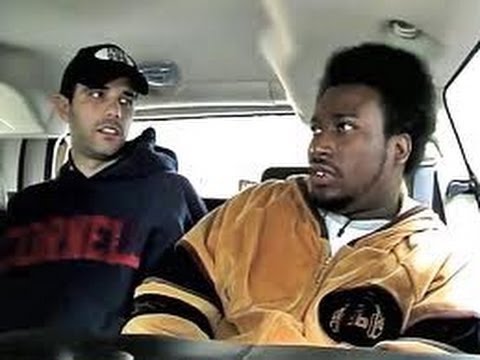

MTV News went to Detroit with Eminem in 1999 to see the city that made Slim Shady, and the house that made the cover of “The Marshall Mathers LP”.
#Eminem #MTVNews
Subscribe to MTV News: https://goo.gl/cXCwIK
More from MTV News:
Official MTV News Website: http://www.mtv.com/news/
Like MTV News: https://www.facebook.com/mtvnews
Follow MTV News: https://twitter.com/mtvnews
MTV News Instagram: https://instagram.com/mtvnews/
#MTVNews is your destination for music docs, celeb interviews and more!


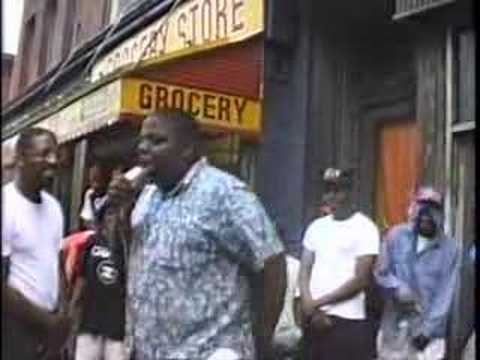

Tupac with Death Row Disses Nas in Interview at MTV Music Awards!
SUBSCRIBE NOW!!!! http://www.youtube.com/user/MMMVintageVideos
Tupac Amaru Shakur (/ˈtuːpɑːk ʃəˈkʊər/ TOO-pahk shə-KOOR;[1] born Lesane Parish Crooks; June 16, 1971 – September 13, 1996), also known by his stage names 2Pac and briefly as Makaveli, was an American rapper, songwriter, and actor.[2] Shakur has sold over 75 million records worldwide, making him one of the best-selling music artists of all time.[3] His double disc albums All Eyez on Me and his Greatest Hits are among the best selling albums in the United States.[4] He has been listed and ranked as one of the greatest artists of all time by many magazines, including Rolling Stone which ranked him 86th on its list of The 100 Greatest Artists of All Time.[5] Consistently ranked as one of the greatest rappers ever, he was ranked number 2 by MTV in their list of The Greatest MCs of All-Time in 2006.[6] 2Pac is also ranked as the most influential rapper of all time.[7][8][9][10][11]
Shakur began his career as a roadie, backup dancer, and MC for the alternative hip hop group Digital Underground, eventually branching off as a solo artist.[12][13][14] The themes of most of Shakur's songs revolved around the violence and hardship in inner cities, racism and other social problems. Both of his parents and several other of his family were members of the Black Panther Party, whose ideals were reflected in his songs.
During the latter part of his career, Shakur was a vocal participant in the so-called East Coast–West Coast hip hop rivalry, becoming involved in conflicts with other rappers, producers and record-label staff members, most notably The Notorious B.I.G. and the label Bad Boy Records.[15]
On September 7, 1996, Shakur was shot multiple times in a drive-by shooting at the intersection of Flamingo Road and Koval Lane in Las Vegas, Nevada.[16] He was taken to the University Medical Center of Southern Nevada, where he died six days later.
Upon his release from Clinton Correctional Facility in 1995, Shakur immediately went back to song recording. He began a new group called Outlaw Immortalz. Shakur began recording his first album with Death Row and released the single "California Love" soon after.
On February 13, 1996, Shakur released his fourth solo album, All Eyez on Me. This double album was the first and second of his three-album commitment to Death Row Records. It sold over nine million copies.[68] The record was a general departure from the introspective subject matter of Me Against the World, being more oriented toward a thug and gangsta mentality. Shakur continued his recordings despite increasing problems at the Death Row label. Dr. Dre left his post as house producer to form his own label, Aftermath. Shakur continued to produce hundreds of tracks during his time at Death Row, most of which would be released on his posthumous albums Still I Rise, Until the End of Time, Better Dayz, Loyal to the Game and Pac's Life. He also began the process of recording an album with the Boot Camp Clik and their label Duck Down Records, both New York – based, entitled One Nation.[69]
On June 4, 1996, he and Outlawz released the diss track "Hit 'Em Up", a scathing lyrical assault on Biggie and others associated with him. In the track, Shakur claimed to have had sexual intercourse with Faith Evans, Biggie's wife at the time, and attacked Bad Boy's street credibility. Shakur was convinced that some members associated with Bad Boy had known about the '94 attack on him beforehand due to their behavior that night and what his sources told him. After the attack, Shakur immediately accused Jimmy Henchman (an associate of Bad Boy CEO Sean Combs) of orchestrating the attack, according to a 2005 interview with Henchman in Vibe magazine. After the attack, Shakur therefore aligned himself with Suge, Death Row's CEO, who was already bitter toward Combs over a 1995 incident at the Platinum Club in Atlanta, Georgia, which culminated in the death of Suge Knight's friend and bodyguard, Jake Robles; Knight was adamant in voicing his suspicions of Combs' involvement.[70]
Collaborator Buckshot claimed in 2015 that Shakur defended him against Suge Knight, who had insisted that the East Coast rapper could not come with him to Las Vegas on the grounds of the ongoing hip hop rivalry. Shakur asserted that he would not board the plane unless accompanied by Buckshot and was described by the fellow rapper as looking "discomforted" while they recorded a song together in a studio after Shakur "tore up the plane tickets".